

Location
Taipei 101 was the tallest building in the world from 2004 until the opening of the Burj Khalifa in Dubai in 2010.
It comprises 101 floors and is 509,2m tall. Taipei 101 was the first building in the world to break the half-kilometer mark in height and the first record-setting skyscraper constructed in the new millennium - 3rd millennium. Upon its completion it had the fastest ascending elevator: 16.83 m/s (55.22 ft/s) (60.6 km/h, 37.7 mi/h). Now it has been succeeded by Burj Khalifa's elevator whose speed of ascending is 18 m/s (64 km/h).
The building was architecturally created as a symbol of the evolution of technology and Asian tradition. Its postmodernist approach to style incorporates traditional design elements and gives them modern treatments. The building is light green and resembles a bamboo plant. It is designed to withstand typhoons and earthquakes. A multi-level shopping mall adjoining the tower houses hundreds of fashionable stores, restaurants and clubs.
Taipei 101 was designed by C.Y. Lee & partners and constructed primarily by KTRT Joint Venture. The tower has served as an icon of modern Taiwan ever since its opening, and received the 2004 Emporis Skyscraper Award.
Take the Blue Line MRT to Taipei City Hall Station and take a short walk from there.
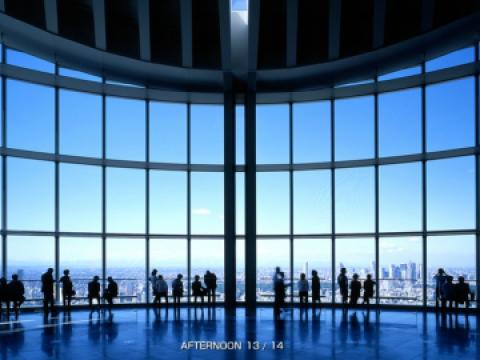
Admission fee to the indoor observation deck is NT$350. Admission is free to the indoor deck for children below 100cm in height.
A separate ticket of NT$100 is required for visiting the outdoor observation deck, which is touted as the world's highest outdoor deck. Tickets are available on the west side counter, on the 5th floor. It is mandatory to purchase the ticket for the indoor observation deck as well, to visit the outdoor deck. The observation decks are open daily from 10:00am to 10:00pm, and tickets are sold till 9:15pm.